Unincorporated Chaffee County: Land Use Code Rewrite Project - Wildlife Habitat Protections - Resilience, Sustainability, and Environmental Design Award
Unincorporated Chaffee County: Land Use Code Rewrite Project – Wildlife Habitat Protections
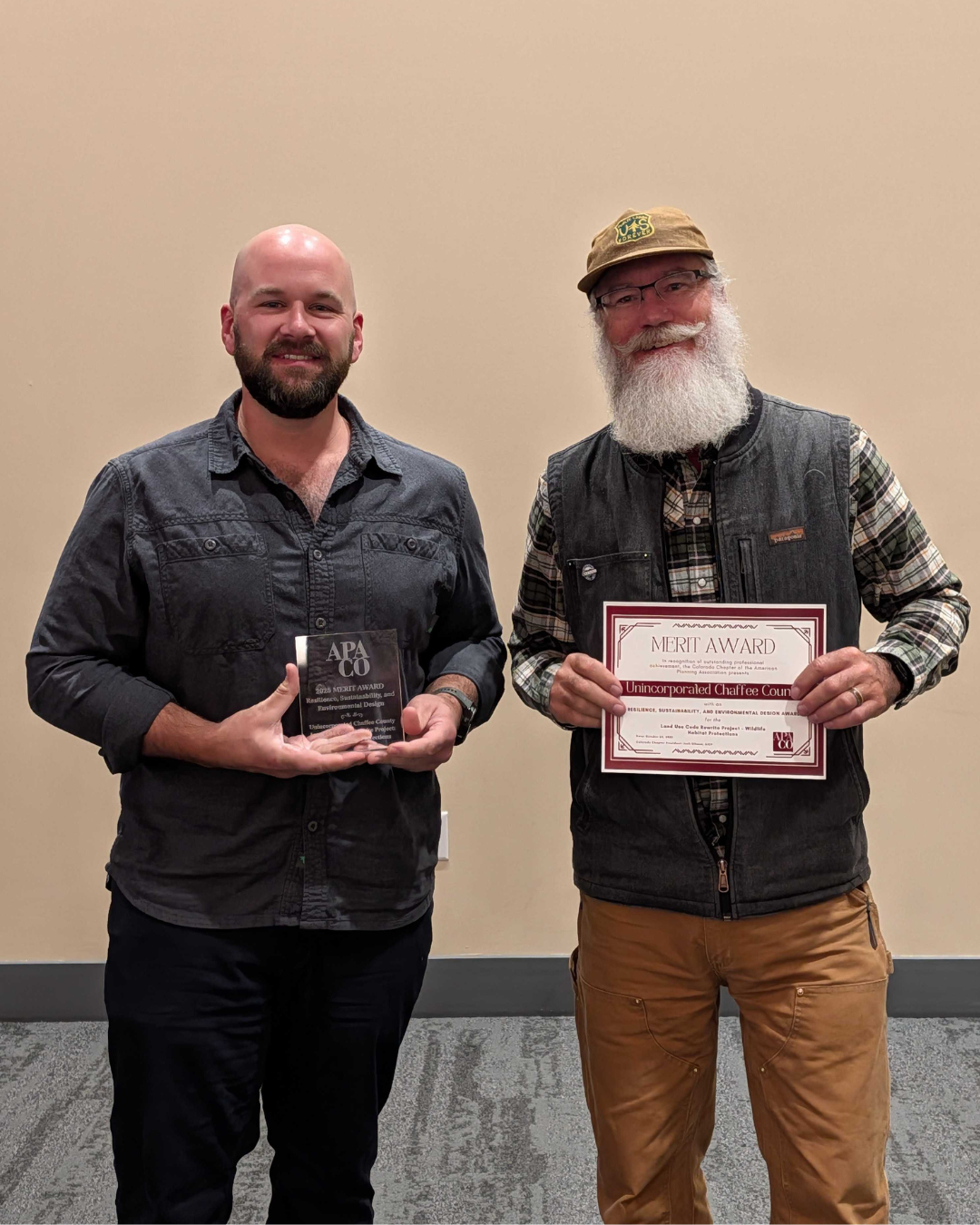
Merit Award: Resilience, Sustainability, and Environmental Design
By: Miles Cottom, Director of Community Planning & Natural Resources, Chaffee County
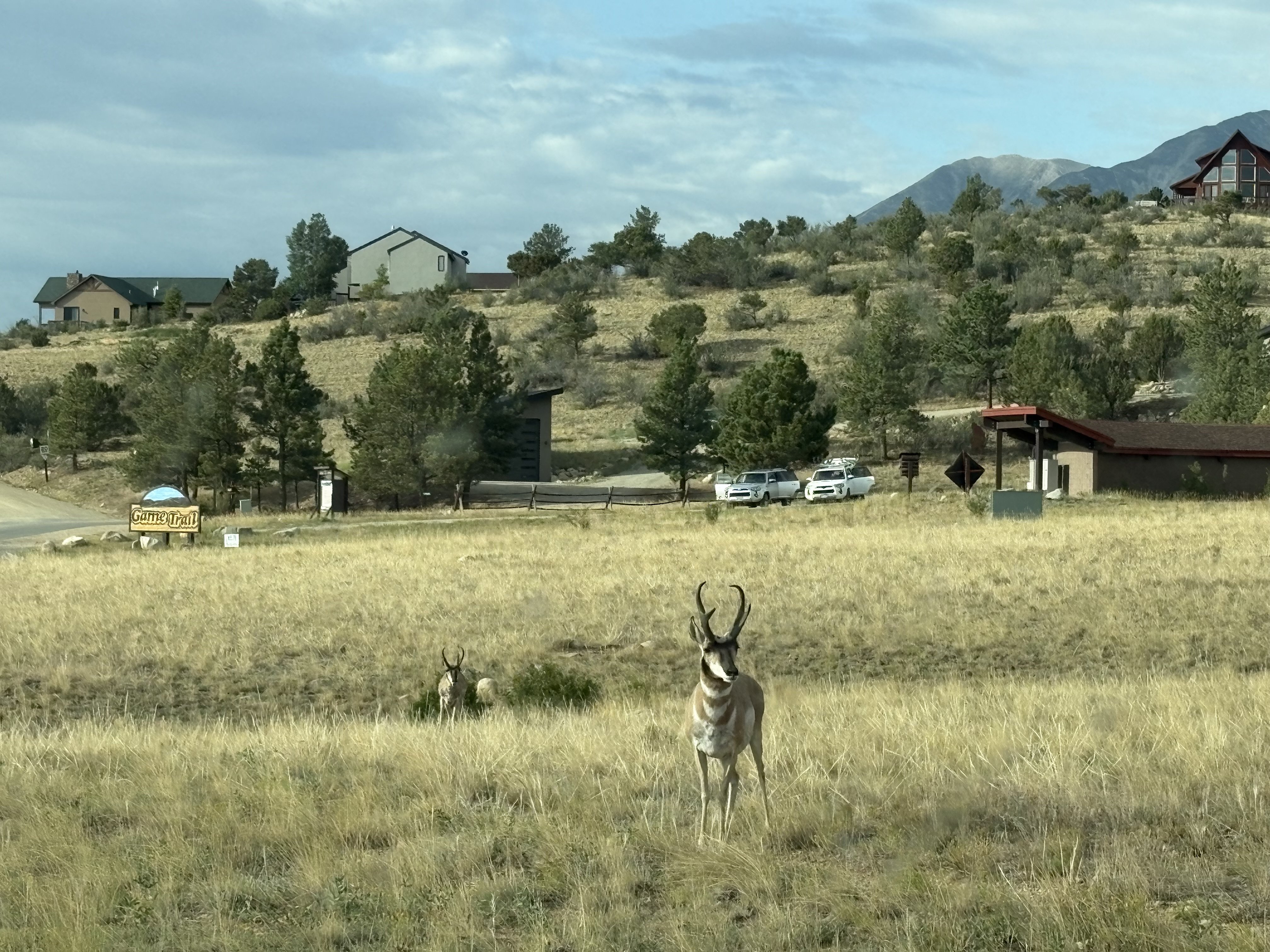
Perched atop an alpine outcropping, a surefooted mountain goat surveys the valley below. Wary pronghorn forage the snow-dusted prairie sagebrush. A rutting elk bugles before the dying colors of an early fall. These are scenes out of the portfolio of any western wildlife photographer, from John Fielder to Joe Riis to David Williams Shaw. To the people of Chaffee County, this is also the backyard.
Beneath the towering peaks of the Sawatch Range, along the banks of the Arkansas River, people that live, work, and play in Chaffee County do so on lands that serve as habitat for numerous key wildlife populations - including critical winter range for some of the state’s largest herds of elk, mule deer, and bighorn sheep. The theme of the County’s comprehensive plan provides a foundation for the protection of these wild places: support development near the population centers while working to lessen its negative externalities in the rurality. Keep the town “town,” and the country “country.”
In 2022, Chaffee County began a three-year, public-informed initiative to rewrite its land use code to better align the County’s land use policy with its comprehensive plan, including increased protections for natural resources. The new code incorporates significant regulatory provisions aimed at preserving crucial wildlife habitat.
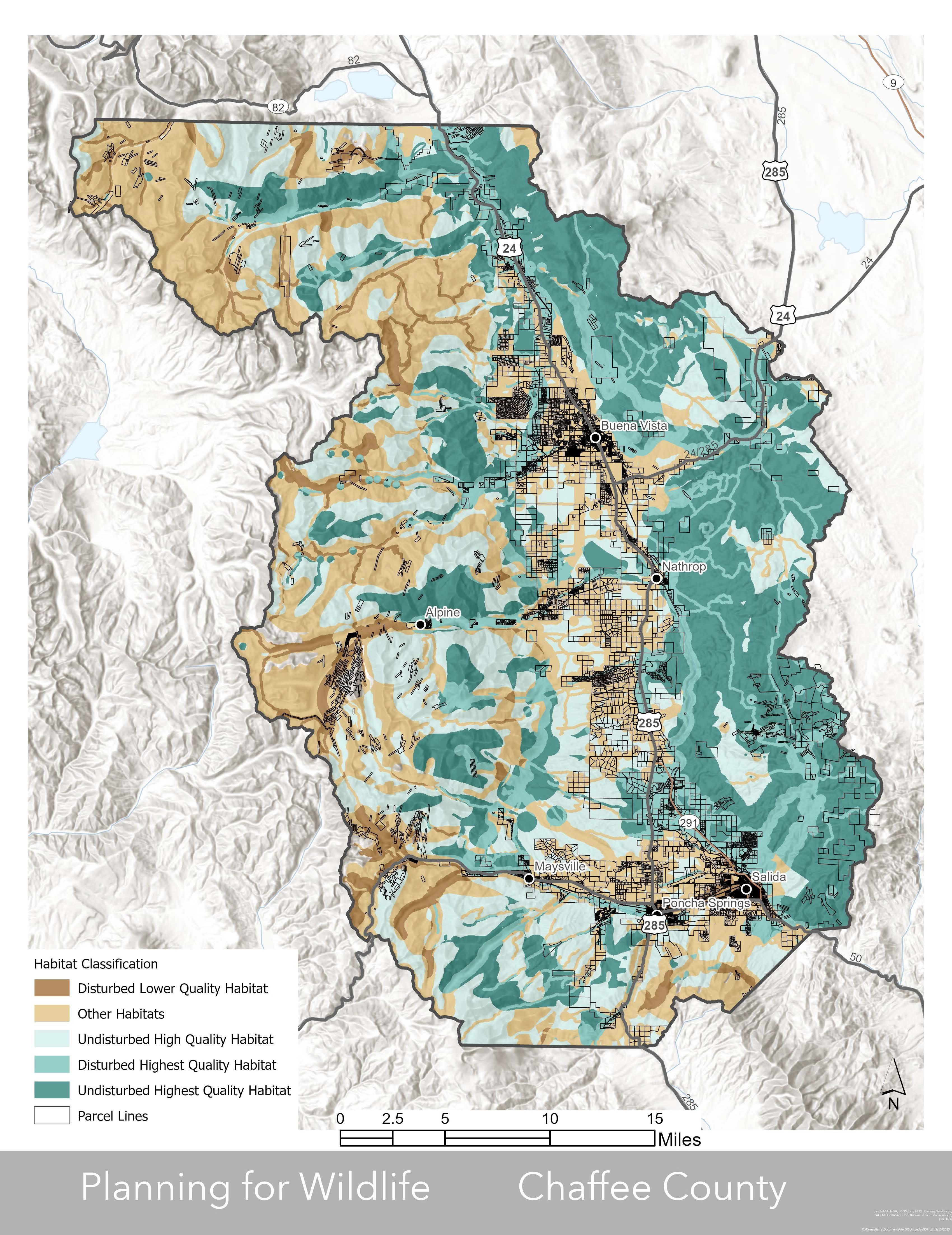
The County adopted a “Planning for Wildlife” map, which assessed the wildlife habitat quality across the entirety of Chaffee County. Where possible, development in areas of key habitat must be avoided. If a proposed subdivision is within a key habitat area, it shall be designed with clustered lots, with two-thirds of the property preserved as protected open space in perpetuity. Notably, the County includes working lands as open space, which helps to balance the need for local agriculture with habitat protections. Recognizing that impacts to habitat cannot be avoided in all instances, the code includes a table of required mitigation actions depending on the habitat quality.
The code utilizes setbacks to protect key natural resources. Development shall remain at least 100’ from rivers, lakes, and wetlands, as well as from quality habitat. Recognizing that waterways typically serve as vital migration routes, setbacks from rivers and streams increase to 300’ when in high or highest quality habitat.
Chaffee County became one of the first localities in the country to codify road ecology provisions for land development. New roads shall be designed to provide for safe passage of wildlife (e.g., depending upon the area, signage, reduced design speeds, narrowing, traffic calming, wildlife passage structures, wildlife fencing, at-grade crossings, and periodic or seasonal closures). In addition to increasing habitat connectivity, these provisions also address a related transportation safety issue: over one quarter (25%) of all reported collisions in Chaffee County are vehicle-wildlife (compared to a state average of 3.3%).
Chaffee County believes that the natural resource protections included in its new code will prevent the further fragmentation of critical wildlife habitat from becoming a reality and hopes that it can be used as a model for other jurisdictions looking to do the same.