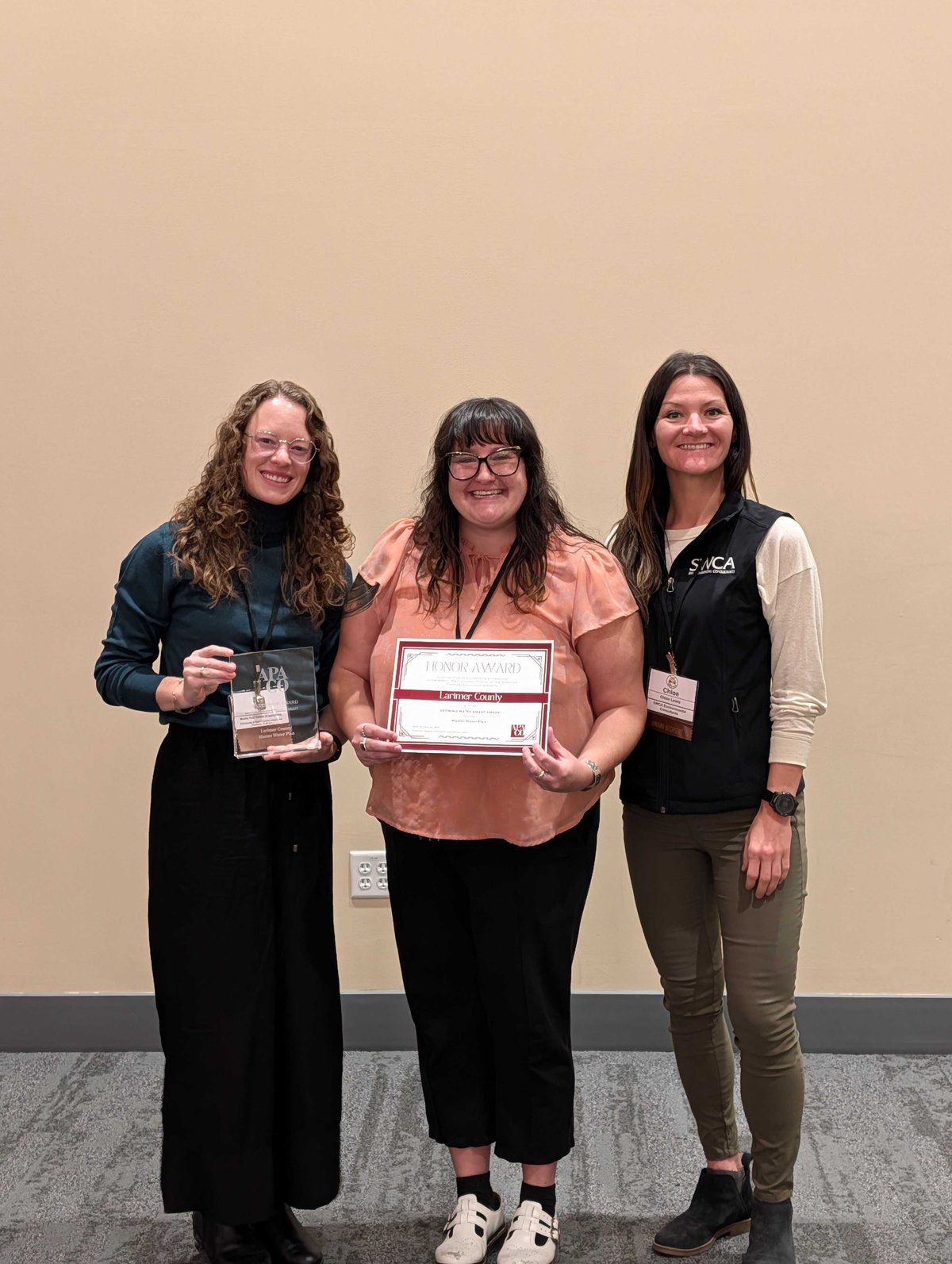
Larimer County: Master Water Plan - Growing Water Smart Award
Growing Water Smart: Larimer County’s Water Master Plan
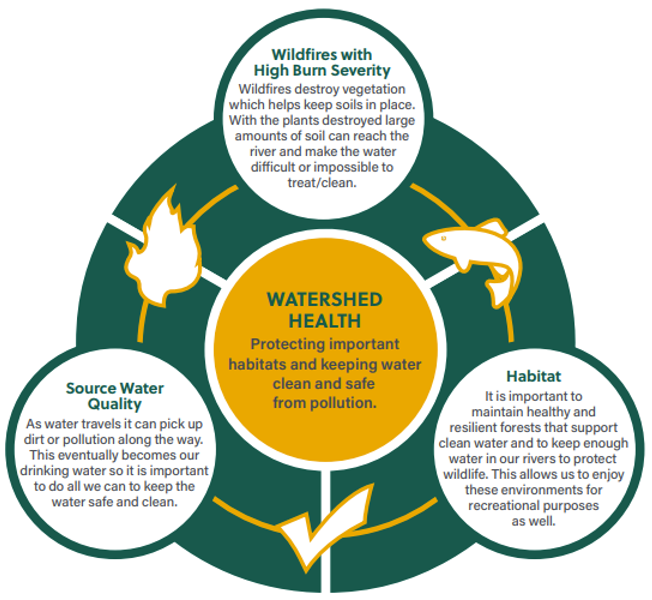
Larimer County, one of Colorado’s fastest-growing regions in Northern Colorado, spans 2,600 square miles from mountains to plains and is home to eight cities and towns. With a projected 56% population increase between 2017 and 2040, the County faces a complex water future. More than 120 water providers serve residents and businesses, ranging from small rural districts to large municipal utilities. At the same time, the region faces mounting pressures from drought, wildfire, and post-fire flooding.
Water scarcity is no longer a distant concern. Some providers have already placed moratoria on new taps, while agricultural water continues to be transferred out of the region. These challenges made it clear the County needed a comprehensive, forward-looking water strategy to support sustainable growth and protect both agriculture and natural resources.
A Foundation for the Future
In December 2024, Larimer County adopted its first Water Master Plan, now an element of the County’s Comprehensive Plan. Prompted by a 2022 regional study and developed in collaboration with local partners, the plan provides a framework to align land use decisions with long-term water availability. It reflects the county’s unique mix of urban, rural, and agricultural landscapes while drawing from the Colorado Water Plan.
The plan sets a vision supported by five goals:
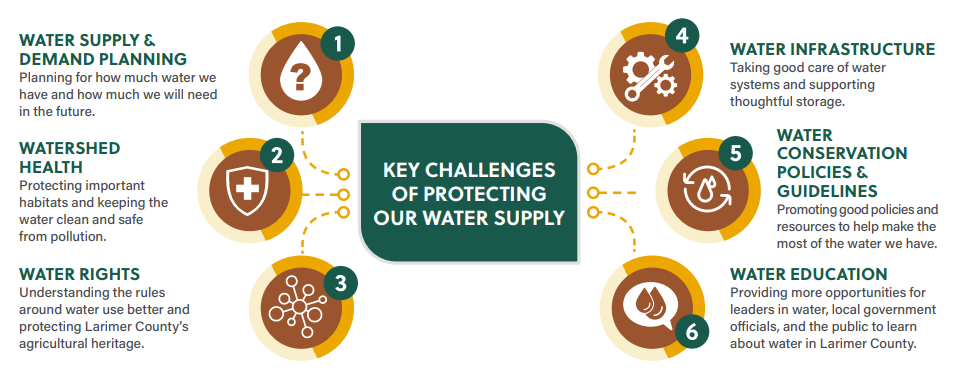
- Minimize watershed threats such as wildfire and flooding.
- Strengthen communication and collaboration.
- Promote water literacy and public understanding.
- Align land use planning with water resources.
- Advance conservation and efficiency measures.
The plan then outlines ten strategies emphasizing agriculture, resilience, and education. A central message is that healthy watersheds are essential for a reliable water supply – now and for future generations.
Collaborative Approach
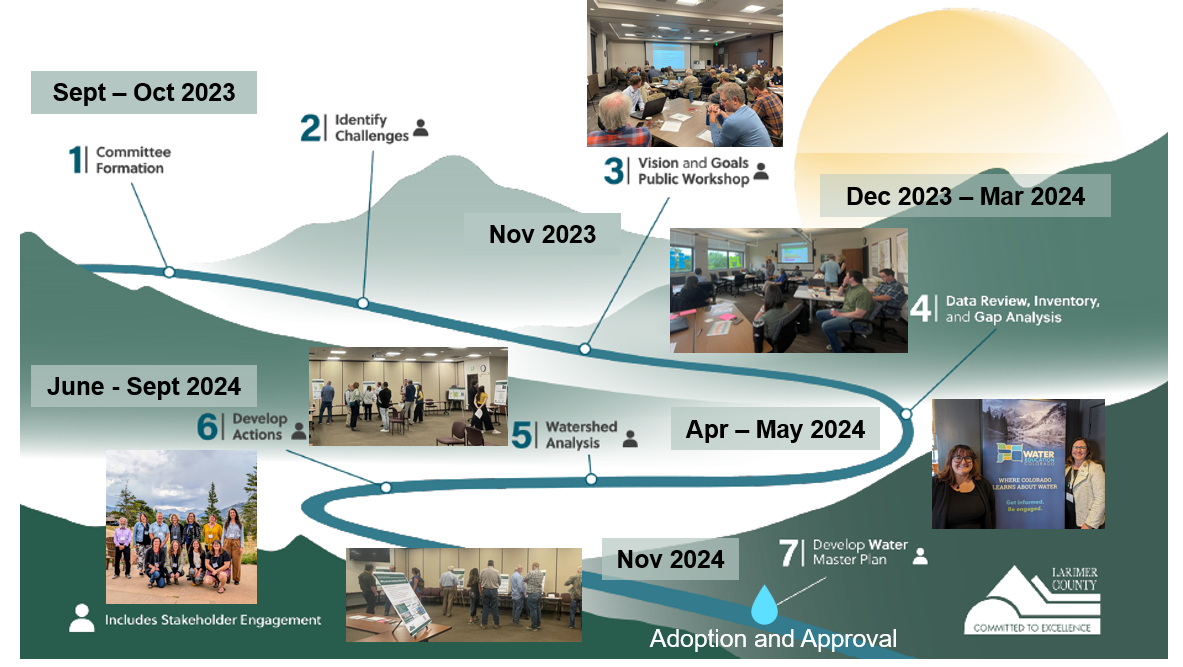
Creating the plan was highly collaborative. Beginning in summer 2023, county staff worked with consultants SWCA and AE2S and two advisory committees representing utilities, agriculture, municipalities, and environmental organizations. Dozens of regional stakeholders also provided input through open houses, online forums, commission meetings, and focus groups. The Colorado Division of Homeland Security and Emergency Management provided grant funding through its Hazard Mitigation Program. All this input shaped the plan.
Moving from Planning to Action
Since adoption, Larimer County has moved quickly into implementation. Efforts include applying for grants to support public education, launching a groundwater study, and drafting land use code updates to promote conservation. Partnerships are advancing watershed resilience projects, and outreach continues through events such as Water Symposia. Future efforts may address communities most affected by water scarcity and quality issues.
A Model for Colorado
The Water Master Plan shows how land use planning and water stewardship can be integrated to meet regional needs. It sets actionable goals, updates development review processes, promotes interagency coordination, and expands education and outreach. Importantly, it seeks to keep water with agriculture — vital to the county’s economy and identity — while preparing for population growth and climate impacts.
By adopting this plan, Larimer County has taken a proactive, collaborative step to address its water future, offering a model for other Colorado communities.